Storm and hail roof damage in Colleyville
Get help with a roof concern after hail or strong wind. A free inspection looks at the actual covering and details before the repair scope is decided.
Free roof inspections for Colleyville homes and buildings.
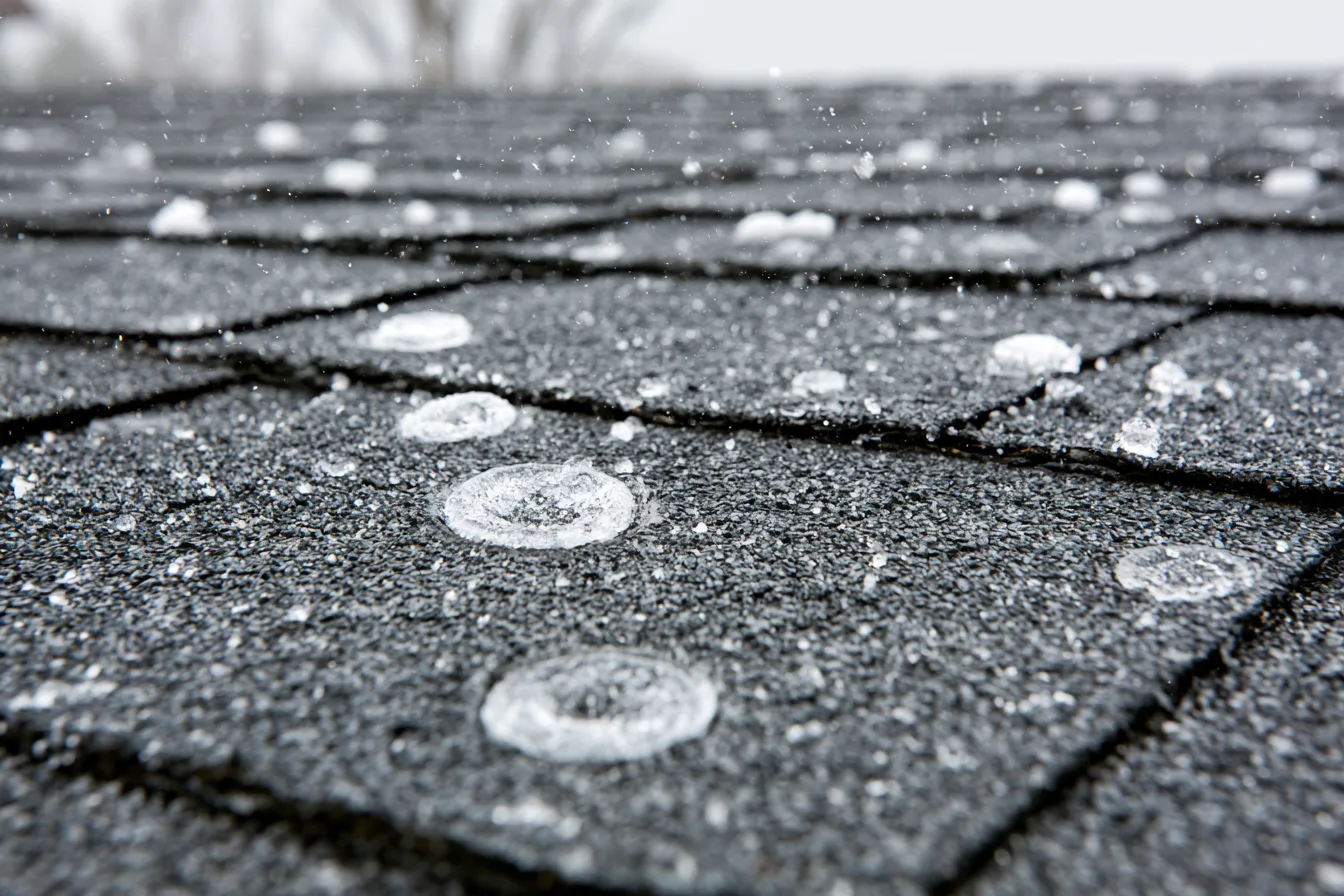
Inspecting hail and wind damage on a Colleyville roof
Wind can lift, crease or remove shingles, interrupting the overlaps that shed rain. Hail strikes a surface; the effect depends on the material, impact and condition of the covering. A roof may need different work for those two kinds of damage.
Ground observations are useful starting points. Shingle pieces in the yard, a damaged gutter or water inside tell you something changed. They cannot show the full condition of every slope. You do not need to climb onto the roof to make the request.
The inspection considers the covering and its connections, including whether damaged material can be replaced without disturbing a wider area of failing roofing.
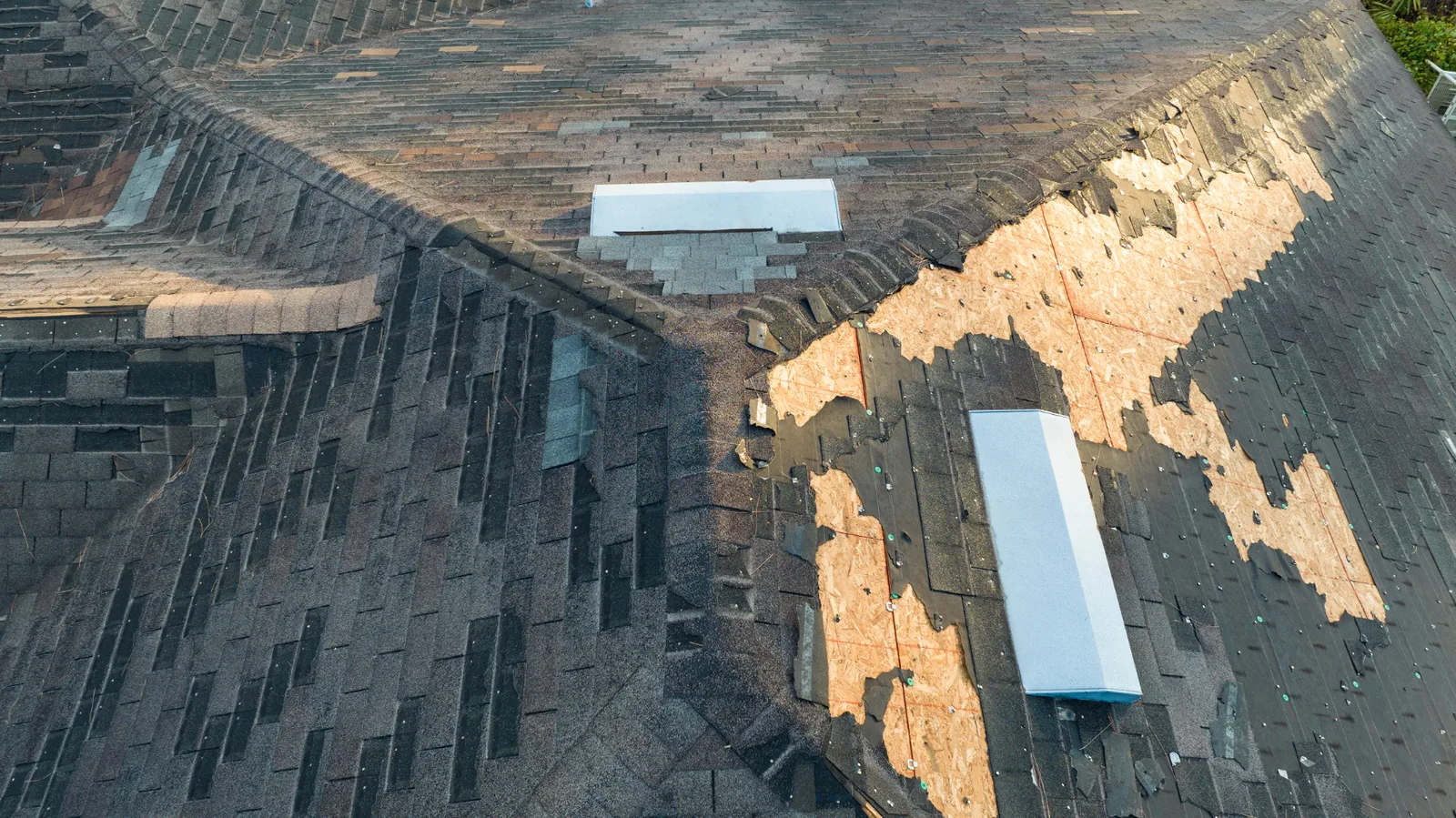
What hail and wind do to a Colleyville roof
Hail and wind leave different marks, and they don’t always show from the ground.
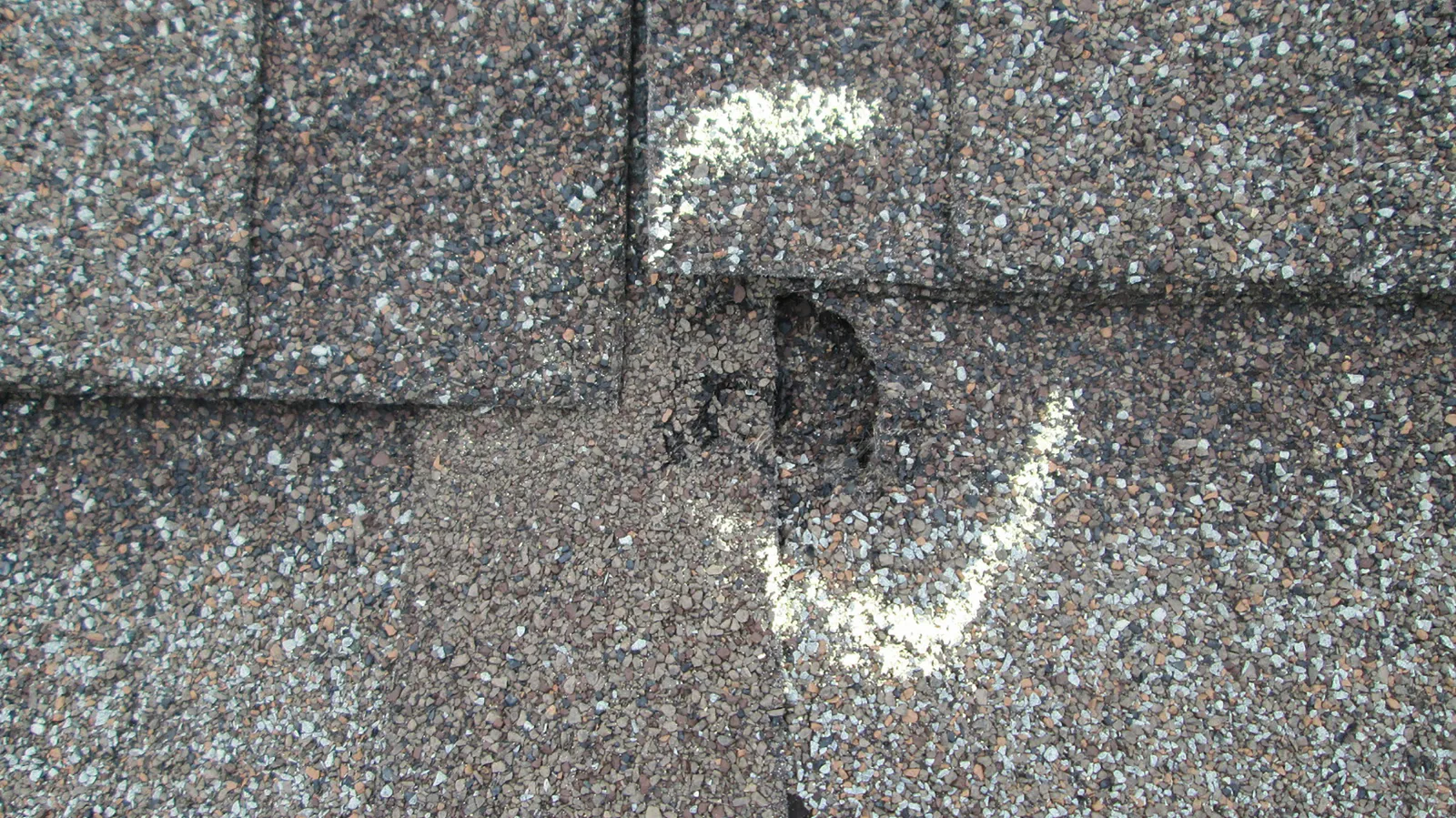
- Hail on shingles
A hailstone knocks granules loose and can bruise the mat underneath. A bruise feels soft under a thumb, like a spot on an apple. With the granules gone, the asphalt is open to the sun and that spot ages faster than the shingle around it. It may not leak this season.
- Wind on shingles
Wind gets under a tab, breaks the seal strip and folds the shingle back. Some blow off. Others settle back down with a crease across the top, which is a crack in the mat. Once the seal is broken, the tab lifts again in the next storm.
- Ridge caps and edges
Ridge and hip caps sit highest and are bent over the peak, so hail splits them and wind peels them before the field shingles. Rakes and eaves are where wind first gets a grip.
- Soft metal tells the story
Dents in vent caps, flashing, gutters and downspouts show that hail fell hard enough to matter and which direction it came from. They can be easier to read than the shingles.
- Punctures and openings
A limb or wind-thrown debris can punch through shingles and decking. That’s an open hole. It needs a temporary cover first, then a repair that replaces the broken wood underneath.
- Wear that isn’t storm damage
Blistering, granules worn thin by age and scuffs from foot traffic can look like hail. Part of the inspection is telling storm damage from ordinary wear, because only one of them is an insurance question.
Repairing a Colleyville roof after a storm
- Respond to active water
Keep people away from wet electrical fixtures or sagging ceilings. Temporary protection can limit further exposure while the lasting repair is assessed. Availability and safe access must be established at the time of the request.
- Assess the affected material
A displaced shingle, a split flashing and an impact mark are different findings. The roof’s actual condition sets the work; a storm’s reputation does not.
- Restore the roof connection
Lasting work needs compatible materials and sound surroundings. If damage is localized, a repair can be appropriate. Wider damage or deteriorated covering can change the scope.
When water is actively coming in, see emergency roof repair for the distinction between temporary protection and the finished repair.
When Colleyville storm damage means a repair, and when it means a new roof
How much of the roof was hit
Damage on the one slope that faced the wind, or a handful of shingles near a ridge.
Bruising or creasing across every slope, enough that replacing shingles one by one stops making sense.
The shingles themselves
Still flexible. New shingles can be woven in without cracking the ones next to them.
Brittle. Lifting a course to repair it breaks the course above.
Matching
The shingle is still made in a close color.
The line is discontinued, so a patch on a front slope will show.
Under the shingles
No leaks, and the decking is dry.
Water got in, and decking or underlayment has to be opened up.
If a claim is involved, the insurer decides coverage. The roof inspection describes the physical damage. The roof insurance guide explains deductibles and how policies pay.
What nearby storm reports mean for a Colleyville roof
The nearby storm archive collects reported hail and wind points near Colleyville by date. A report close to home is a good reason to have the roof looked at, and a date worth keeping. It can’t say what happened at one address.
Insurance is a separate question from the roofing work. Your policy and insurer determine coverage and payment. The roof insurance guide explains replacement cost, actual cash value and deductibles.
Colleyville storm damage FAQs
Does hail nearby mean I need a new roof?
No. A nearby report does not establish damage at the property, and damage does not automatically establish whole-roof replacement. The condition and extent of affected roofing determine a useful scope.
Can hail damage be judged from the driveway?
Ground observations can raise a concern, but the roof surface and details need a closer assessment. Do not climb onto the roof to check. The free inspection includes a roof walk when access and conditions allow.
Will insurance pay for the work?
That depends on the policy, cause of damage, deductible and insurer’s decision. A roofing inspection can address the physical condition; it cannot promise coverage or a payment amount.
Let the roof condition set the next step.
Describe what changed after the storm and whether water is coming inside. You can request a free inspection without knowing how much work the roof needs.
Call (817) 391-7321