Commercial roof replacement in Colleyville
Plan commercial roof replacement in Colleyville around the assembly, drainage and the people using the building. Start with the existing roof’s condition.
Free roof inspections for Colleyville homes and buildings.
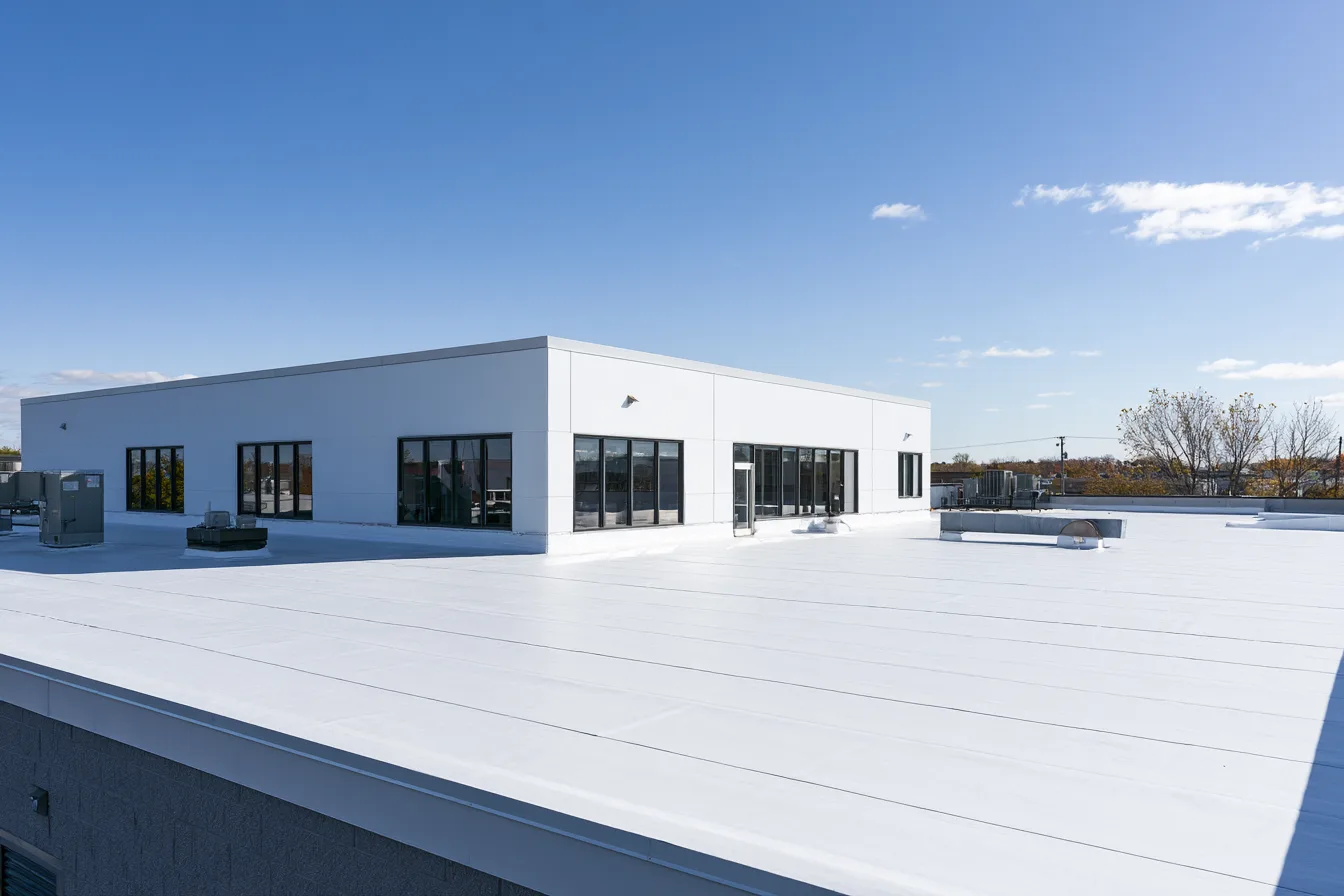
Planning commercial roof replacement in Colleyville
When repairs no longer address the extent of a roof problem, replacement is an opportunity to deal with more than the exposed surface. Wet insulation, failed details, drainage trouble and an unsound substrate each affect what the new roof can achieve.
A manager also has to keep the property functioning. Roof access, material loading, tenant entrances, equipment and weather protection belong in the project plan alongside the membrane or covering.
The useful proposal connects each part of the work to a finding or a building requirement. It should make clear what is being removed, what remains and why the retained material is suitable for the new assembly.
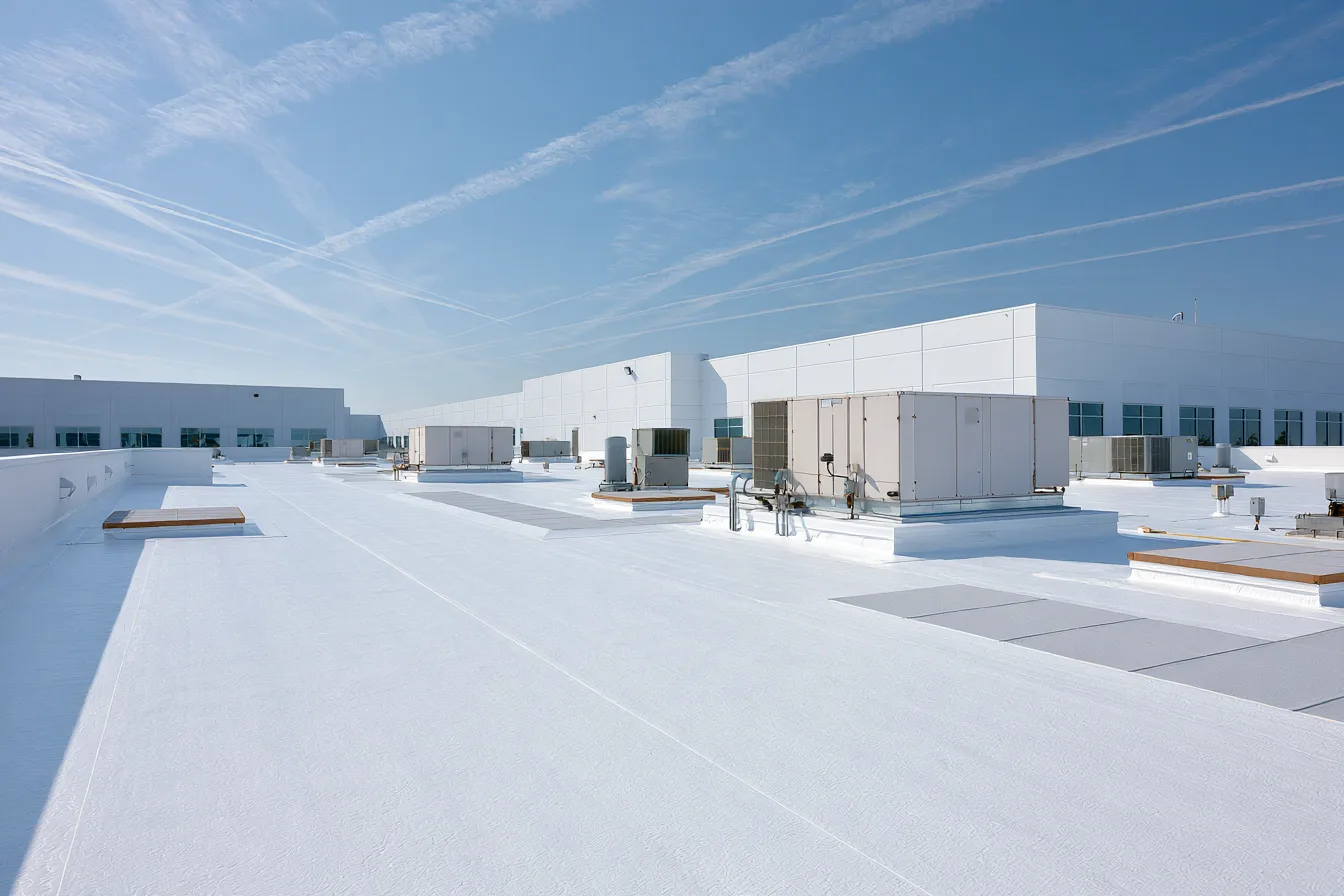
Tear-off and recover options for a Colleyville commercial roof
- Tear-off and replacement
Removing existing roofing exposes the layers below and allows affected material to be addressed. The project needs a plan for the deck, replacement insulation and keeping opened areas protected as work proceeds.
- Recover over an existing roof
Retaining an assembly requires evidence that it is suitable under the applicable code and system requirements. Moisture, attachment, roof height at curbs and drainage remain important. A recover is not simply a less expensive name for replacement.
- Repair or restoration instead
When the assembly is serviceable and problems are limited, a smaller scope may still be useful. A coating requires its own qualification and does not make wet insulation or damaged decking sound.
Building a Colleyville commercial roof replacement scope
- Deck and concealed conditions
The deck carries the new roof and attachment. The scope should address how deteriorated material is evaluated and how discoveries during removal affect the work.
- Insulation and water movement
The replacement is a chance to consider insulation and the route to drains. Standing water should be understood in relation to slope, outlets and structure, rather than treated as a color or coating problem.
- Curbs, edges and penetrations
New roof thickness can affect the available height at equipment curbs and terminations. Those transitions need details that fit the new assembly.
- Price and project administration
Area, removal, insulation, access and equipment coordination affect the budget. Residential material examples do not price this project. Applicable permit and closeout requirements also need confirmation for the specific building and scope.
How a commercial roof replacement moves across a Colleyville building
A commercial reroof is done in sections, because the building underneath stays in use and the roof has to be watertight every night.
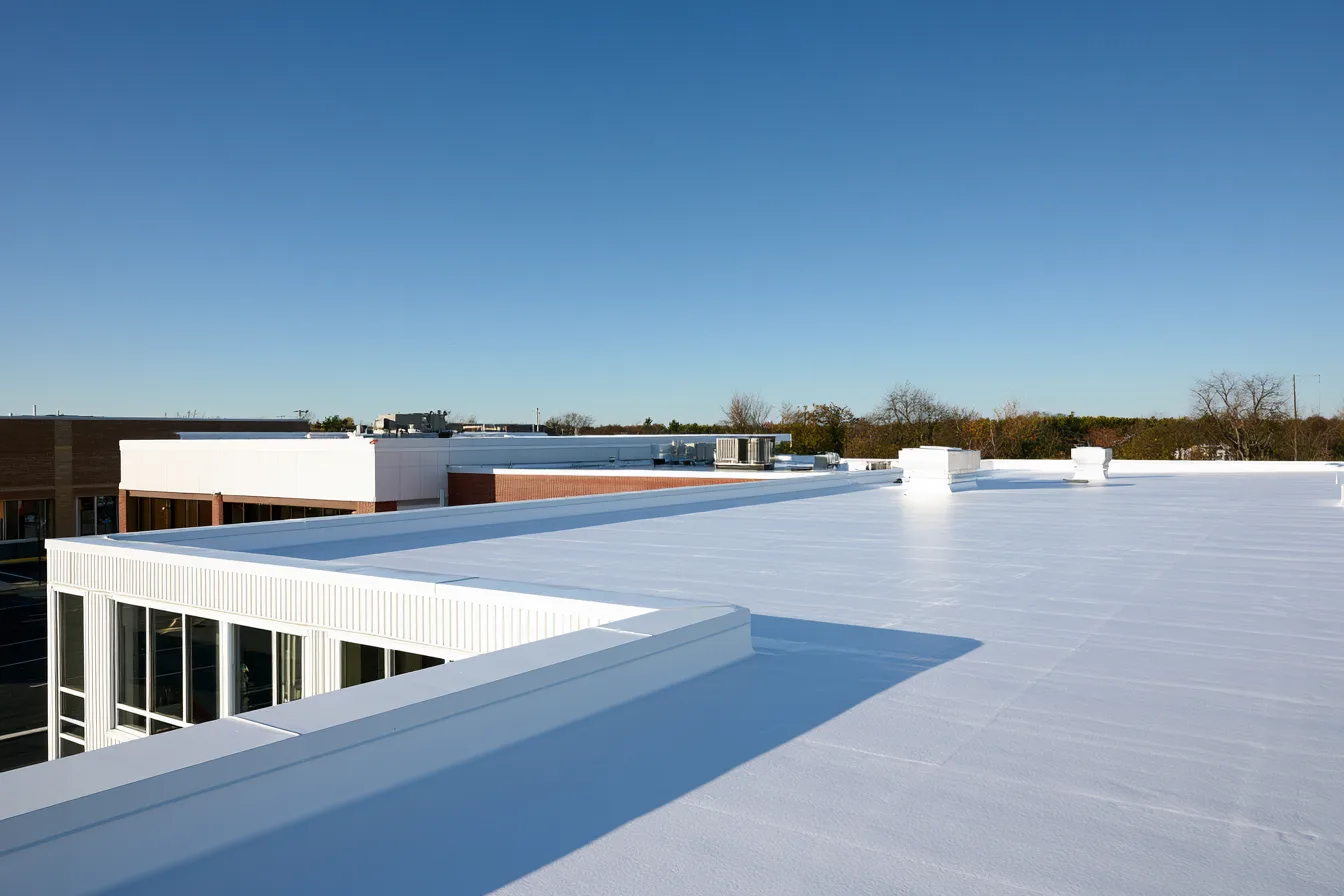
Stage the job
Materials are loaded by crane or lift to spots where the deck can carry them. Dumpsters, access points and any closed-off areas on the ground are set with the building’s traffic in mind.
Open one section
Old membrane and insulation come off an area small enough to be rebuilt and sealed the same day. The edge of each day’s work is tied into the old roof with a temporary seal.
Check the deck
With the deck exposed, rusted steel, rotted wood or spalled concrete gets repaired. This is the part of the job that can’t be fully priced in advance.
Insulate and build slope
New insulation goes down, with tapered boards where water needs help reaching the drains. More insulation also raises the roof surface, which matters at curbs, doors and wall flashing.
Membrane and flashing
The new membrane is installed, and every curb, pipe, drain and wall is flashed into it. Rooftop units may need to be lifted, or their curbs raised, to get proper flashing height.
Edges and closeout
New edge metal and coping lock the perimeter down. Drains are checked, debris comes off the roof, and any manufacturer inspection tied to a warranty happens before the job is closed.
Roof replacement around an occupied Colleyville building
A busy building has routes that cannot casually disappear: entrances, loading areas, service access and paths for people who need the property during the work. Describe these constraints before staging is settled.
Material placement, equipment shutdowns and noise-sensitive spaces can affect the sequence. The roofing scope should identify which connections require another trade and what must remain accessible after the new roof is finished.
Weather protection needs to be part of the work sequence as well. The expected sequence and any interruptions need to be discussed for this building.
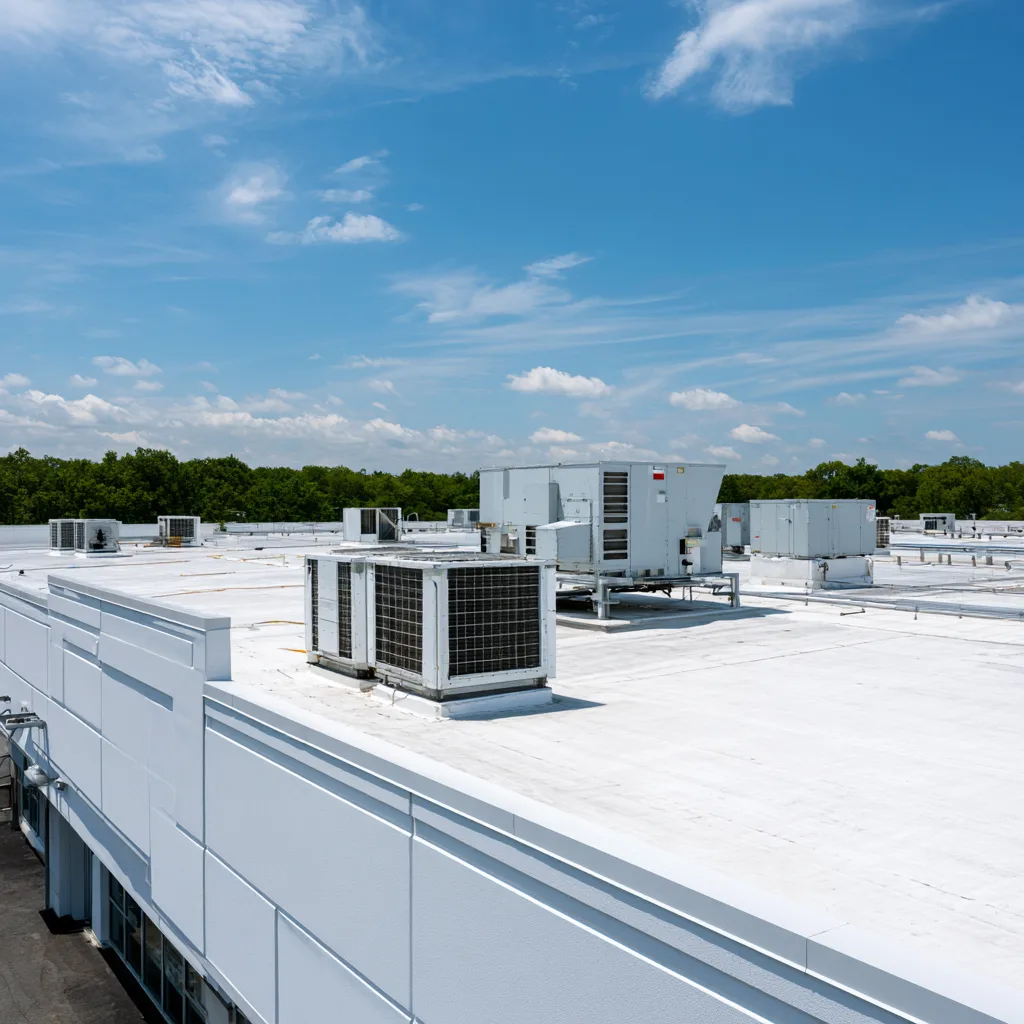
Colleyville commercial replacement FAQs
How do I know if commercial roof replacement is necessary?
The extent of deterioration, moisture and repeated failures matters more than a single roof-age number. An assessment should explain why repair, restoration or replacement fits the actual assembly.
Can the building stay open during replacement?
That depends on the work and the building’s use. Access, interior protection, equipment and any necessary closures need to be discussed for the actual project. Plan any necessary interruptions around the actual building requirements.
Will a new membrane solve drainage problems?
Not automatically. Drainage can depend on roof slope, insulation layout, outlets and structural conditions. Those causes need to be included in the replacement design when they affect the roof.
Bring the building requirements into the roof decision.
Include the property’s use, recurring concerns and any project timing constraints. A free inspection gives the replacement discussion a physical starting point.
Call (817) 391-7321