TPO roofing in Colleyville
TPO roofing help for Colleyville commercial buildings. Consider membrane details, insulation, attachment and rooftop equipment as one roof system.
Free roof inspections for Colleyville homes and buildings.
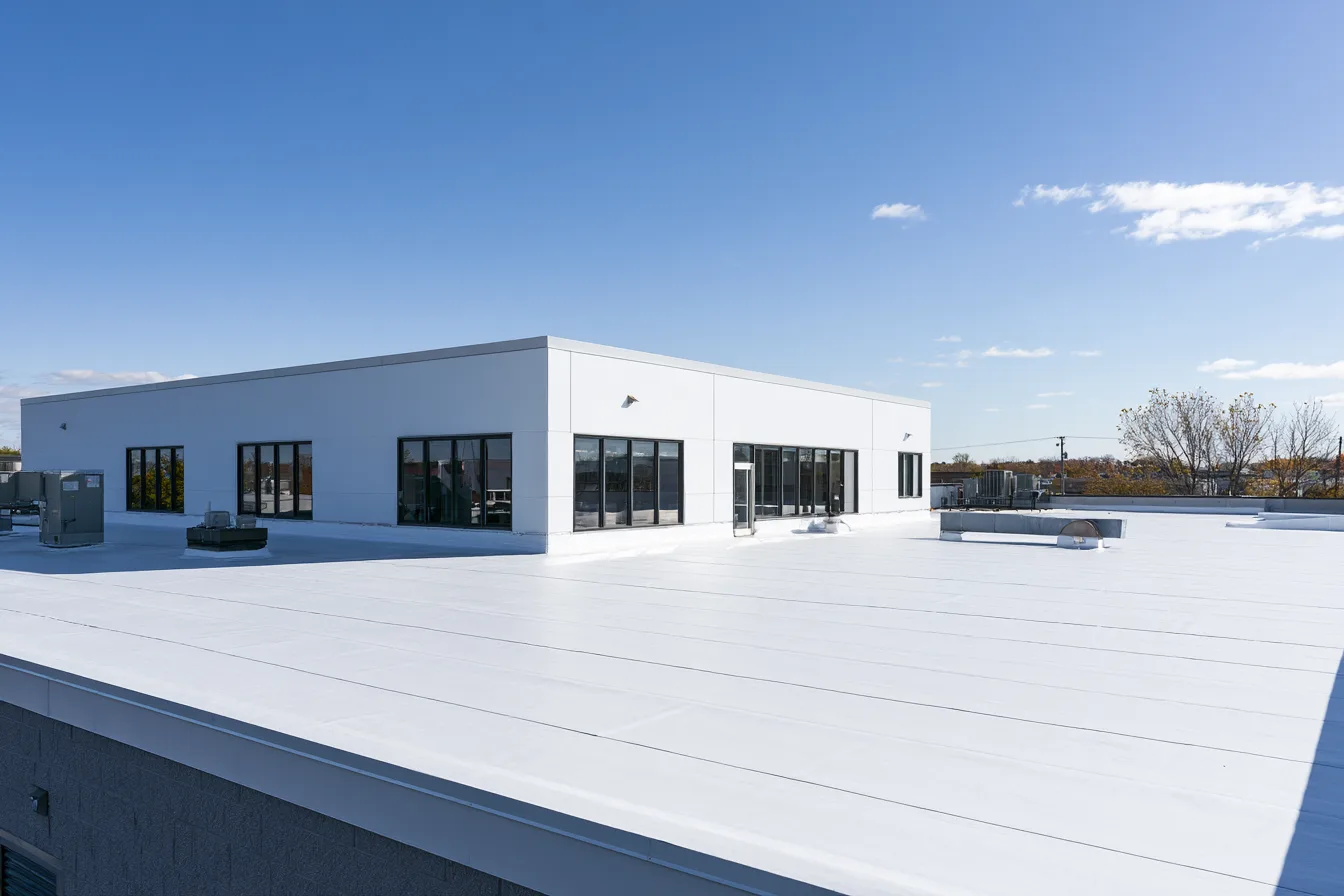
How a TPO roof fits a Colleyville building
TPO is a thermoplastic membrane commonly used on low-slope commercial roofs. Its sheets are joined with heat-welded seams. The membrane still depends on the layers and connections around it: insulation, attachment, edges and the flashing that turns up at equipment and walls.
For an owner or manager, the useful question is not simply whether the roof is white or how thick a roll of membrane is. It is how the proposed assembly fits the deck, drainage, building use and exposure.
On an existing TPO roof, the age and condition of the surface also influence a repair. Preparation and compatibility have to be established before new material is joined to an aged area.
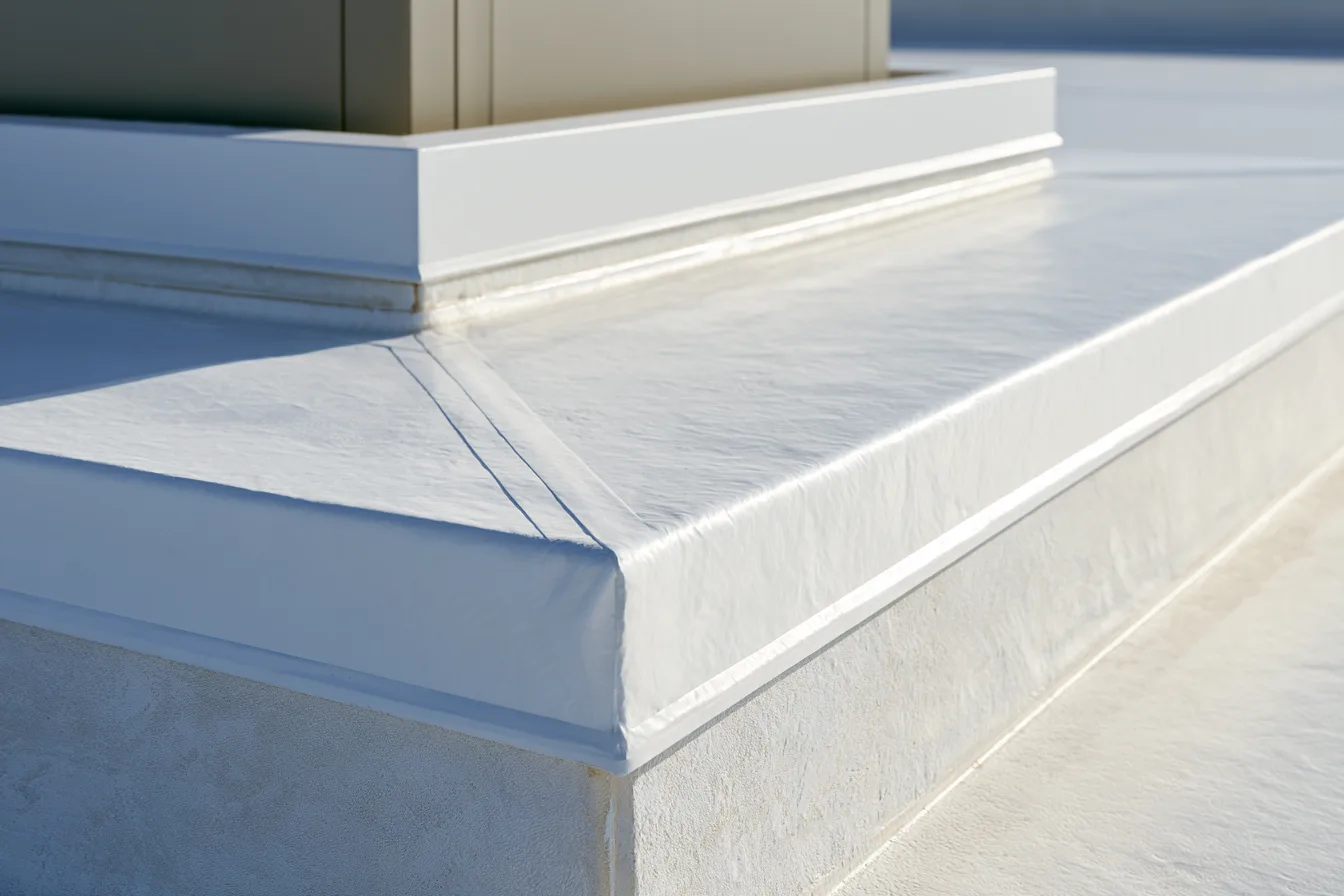
How a TPO roof goes together on a Colleyville building
TPO is the top layer of a stack. Each layer under it has a job, and the order doesn’t change.
The deck
Steel, wood or concrete. It carries everything and holds the fasteners, so rusted or soft areas are repaired before anything goes over them.
Insulation
Rigid foam boards, commonly polyiso, go down in staggered layers. Tapered boards can build slope toward the drains where the deck is dead flat.
Cover board
Where the system includes one, a thin, dense board over the insulation gives the membrane a firm surface and takes the foot traffic and hail that would dent bare foam.
The membrane
Sheets are rolled out and either fastened along one edge with plates and screws, which the next sheet covers, or glued down across their whole surface. Fastened systems go down faster. Adhered systems flutter less in wind.
Welded seams
Overlaps are fused with hot air into a single piece, then probed along their length to find any spot that didn’t take.
Flashing and terminations
The membrane turns up walls and curbs, is held at the top with a bar or metal, then sealed. Pipes get boots. Edges get metal that locks the sheet down against wind.
TPO roof connections on a Colleyville commercial property
- Field seams
Seams join the sheets into a continuous surface. A separation needs assessment of the seam and adjacent membrane, with a repair method suited to the actual material.
- Curbs and penetrations
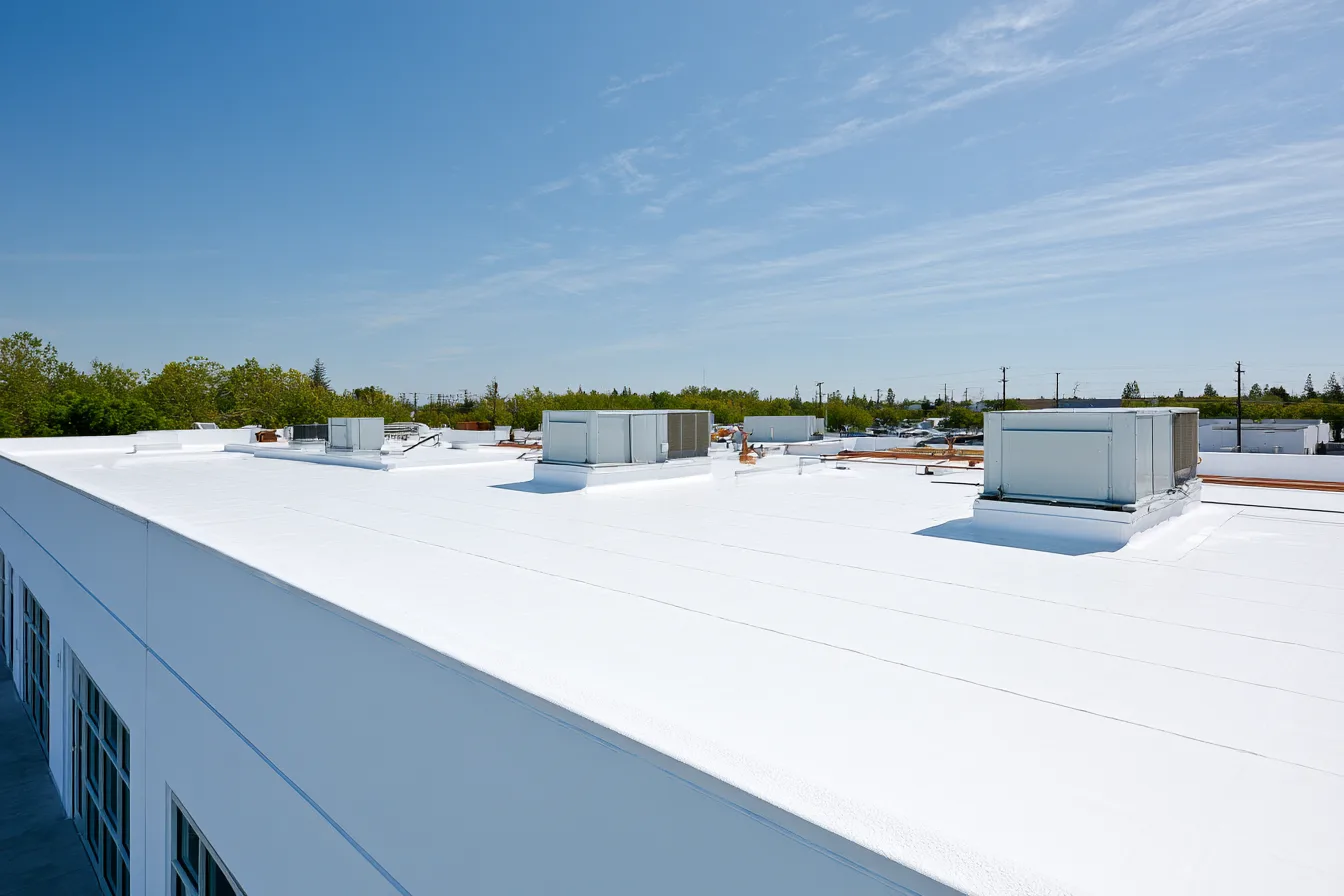
Corners, pipes and equipment supports interrupt the field membrane. Their flashing and top terminations must keep water from moving behind the roof surface.
- Edges and attachment
The perimeter and attachment method form part of the assembly’s performance. The choice of mechanically attached, adhered or another approved arrangement belongs to the system design, not just the membrane selection.
- Insulation and drainage
A membrane cannot correct wet insulation beneath it. Insulation thickness, tapered drainage where appropriate and the condition of the deck affect the complete roofing scope.
TPO repair, recover and replacement in Colleyville
- Repair the existing TPO
A localized puncture or detail failure may be repaired when the surrounding membrane and underlying assembly are suitable. The condition needs to support a sound new connection.
- Consider a recover
A new roof over an existing assembly is a separate project, with code, moisture, attachment and system requirements to resolve. It is not a shortcut around identifying wet or unsound material.
- Replace the assembly as needed
Removal allows affected layers to be addressed and the new roof to be planned from the substrate upward. The extent of removal follows the actual conditions and approved design.
A roof coating is another distinct approach and requires its own surface, adhesion and moisture qualification. It should not be confused with installing a new TPO membrane.
What changes the cost of a TPO roof in Colleyville
The old roof
A dry, sound existing roof that qualifies to be covered over.
Full tear-off to the deck, with disposal and any deck repair.
Insulation
Flat boards at the required thickness.
A tapered layout to fix ponding, or added thickness.
Attachment
Mechanically fastened sheets.
Fully adhered sheets, which take more labor and adhesive.
Interruptions
An open roof with a few drains.
Many curbs, pipes and walls. Each one is flashed by hand.
Membrane thickness
A standard-thickness sheet.
A thicker sheet, chosen for longer wear or heavier service traffic.
Planning TPO roof access for a Colleyville building
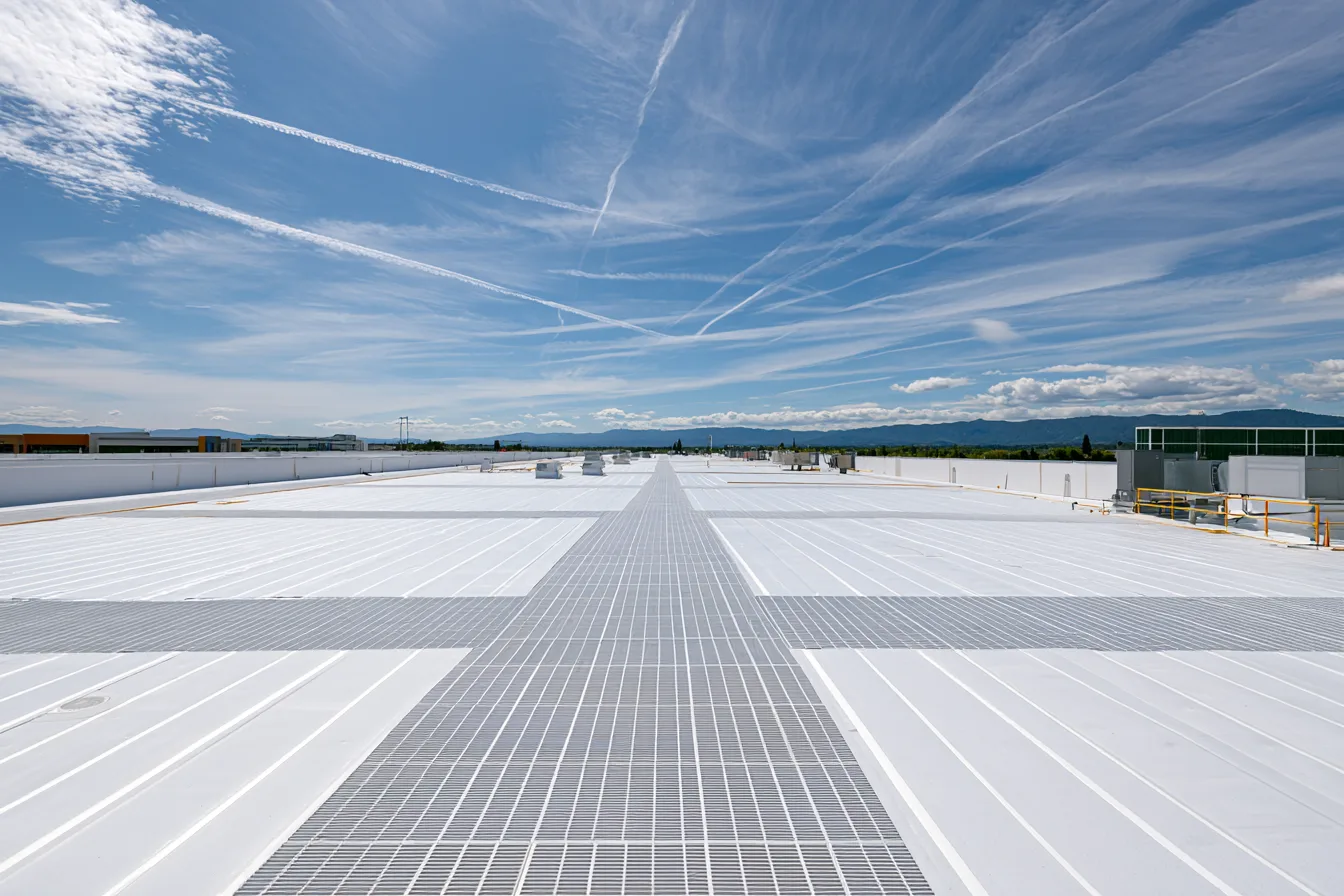
HVAC maintenance and other rooftop visits create repeated routes across the roof. Access from the hatch to equipment, appropriate walkway protection and control of loose parts help make the finished roof usable for its building.
The roofing work also has to connect with equipment work. If a unit or curb is being changed, discuss the sequence before either trade covers a connection that the other needs to reach.
For a broader project, commercial roof replacement brings staging, temporary weather protection and building operations into the scope.
Colleyville TPO roofing FAQs
Does TPO always use the same installation method?
No. The membrane, attachment, insulation, deck and project requirements determine the system. A product name alone does not define the complete installation.
Can new TPO go over the old roof?
Sometimes a recover can be considered, but only after the existing assembly, moisture condition, applicable requirements and proposed attachment are evaluated. A visible surface inspection alone does not establish eligibility.
Is a TPO warranty automatically included?
Coverage depends on the product, installed system and actual warranty issued. See the warranty guide for the difference between material coverage and responsibility for installation. The terms need to match the proposed system and installation.
Plan the TPO roof around the building.
Tell us about the building, its equipment and the roof concern. A free inspection helps establish the existing condition before a system is chosen.
Call (817) 391-7321