Roof replacement in Colleyville
Plan a new roof around the condition of the old one, the materials you want and the way the house is used. Start with a free roof inspection in Colleyville.
Free roof inspections for Colleyville homes and buildings.
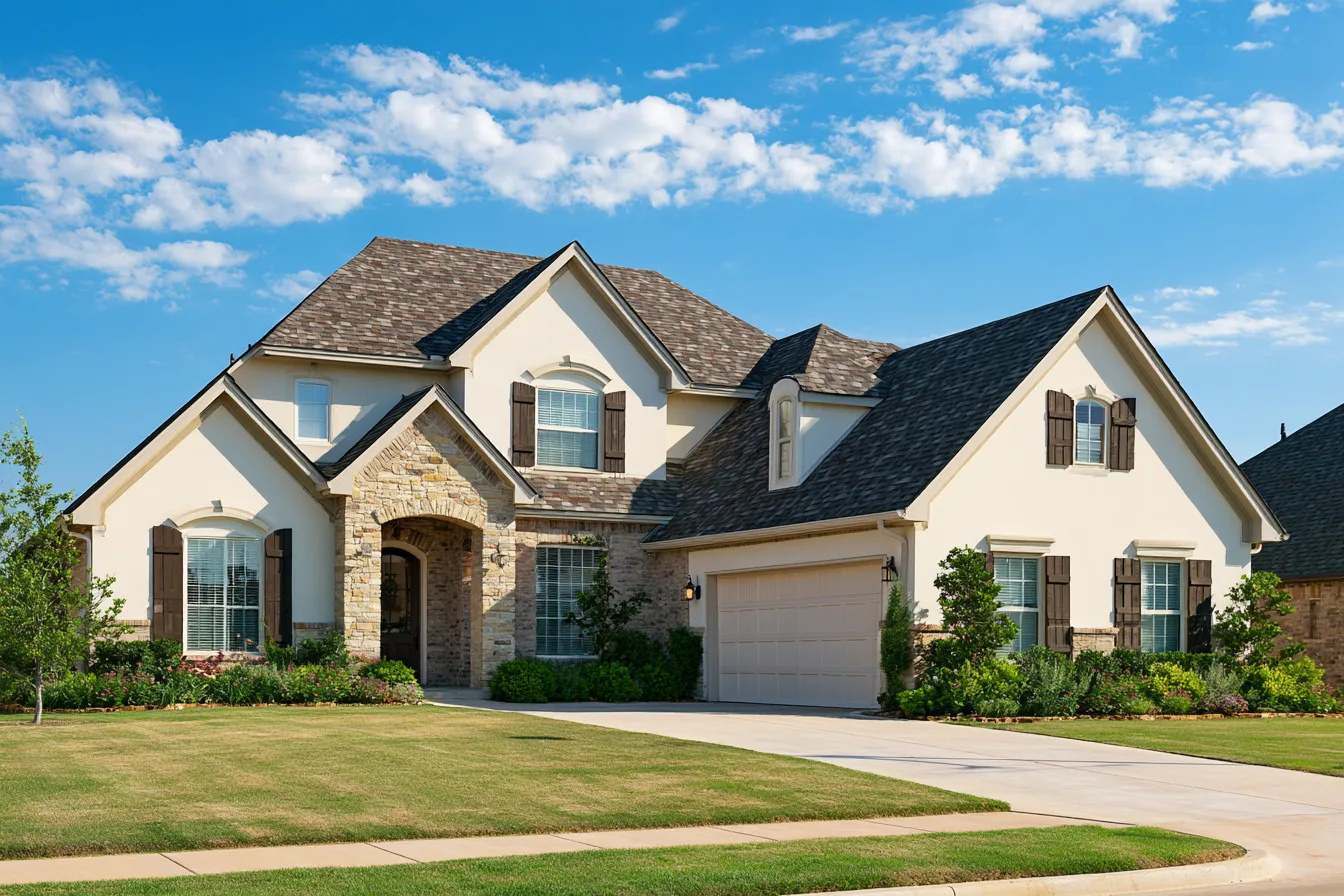
Plan a complete roof replacement for your Colleyville home
A replacement changes more than the shingles you see from the street. The roof deck supports the work, underlayment provides a secondary water-shedding layer, and flashing carries water past walls and openings. Those parts need to work together.
The existing roof also has information to give. Brittle shingles across several slopes, repeated leaks and deteriorated details can make a series of local repairs less useful. A roof’s age is context, not a replacement instruction.
For a home you expect to keep, it is worth considering the full project before choosing a color. A clear scope makes material choices, permit steps and any hidden deck work easier to place in the budget.
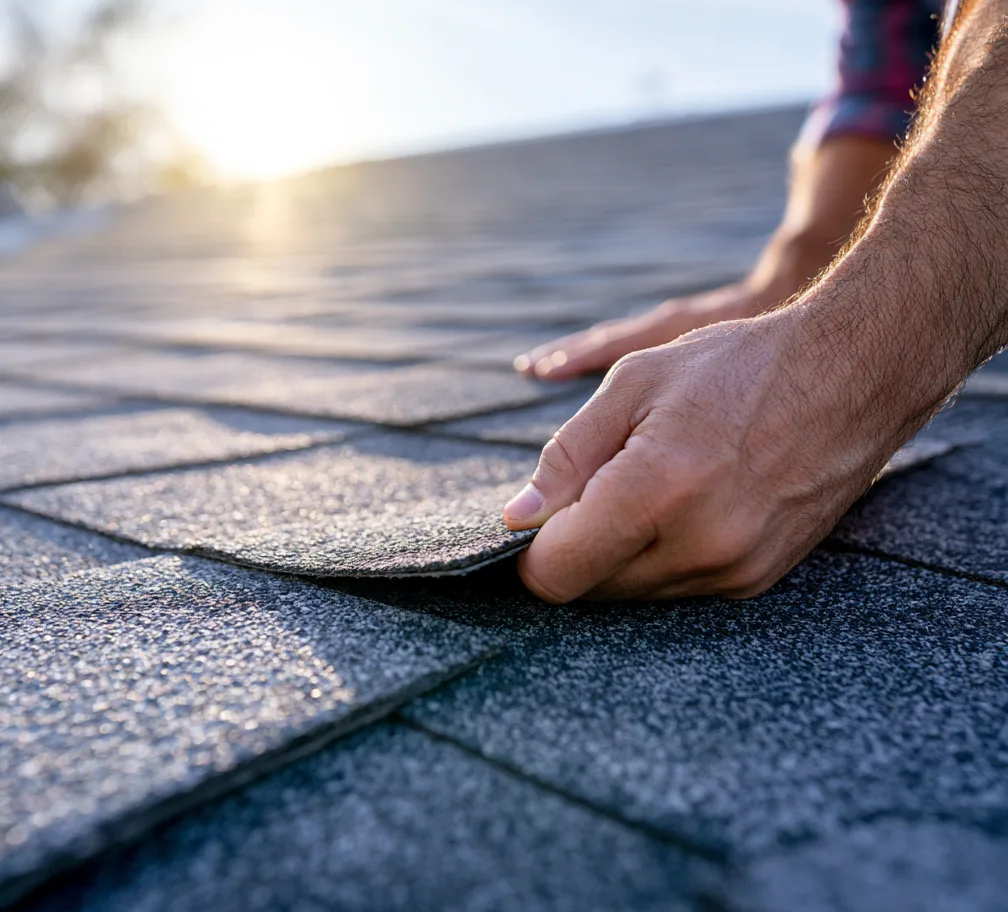
When replacing a Colleyville roof makes more sense than repairing it
A roof doesn’t usually fail all at once. What happens is that repairs stop holding. The shingles around each patch crack when they’re lifted, granules have washed off in sheets and left bare asphalt, and leaks move from one room to another because the problem isn’t one opening anymore. It’s the covering.
That’s different from an older roof with one bad detail. A failed chimney flashing on shingles that still flex is a roof repair, whatever the roof’s age. The inspection sorts out which one you have by checking shingle flexibility, granule cover and the flashing on several slopes, not only the one that leaked.
If repair and replacement are both reasonable, it helps to see both priced. A repair that buys good years on a sound roof is money well spent. The same repair on shingles that crack across every slope mostly buys the next repair.
Building a Colleyville roof replacement scope
A replacement is a stack of layers installed in order. Here’s what each one does and what the work involves.
- Tear-off
The old shingles, underlayment and flashing come off down to the wood. Roofing over old shingles hides the deck and adds weight, so a full replacement starts with a bare deck that can be walked, pressed and looked at.
- Decking
Sound decking stays. Sheets or boards that are soft, delaminated or won’t hold a nail get replaced. How much that will be isn’t known until tear-off, so the proposal should say how added deck work is identified and priced if it is found.
- Underlayment and leak barrier
Underlayment covers the whole deck as a second line of defense under the shingles. A self-sealing membrane goes where water concentrates: in valleys, around penetrations and along walls.
- Edges and starter course
Metal drip edge lines the eaves and rakes so water drops into the gutter and not behind the fascia. A starter course seals down the first row of shingles, which is the row wind works on first.
- Flashing, boots and valleys
Step flashing at walls, flashing around chimneys, pipe boots and valley metal do the work where the roof is interrupted. Old flashing isn’t automatically reusable. The scope should name which pieces are new and which, if any, are staying and why.
- Ventilation and roof openings
Intake at the soffits and exhaust at the ridge work as a pair. Adding ridge vent without clear intake doesn’t move much air, and mixing exhaust types can short-circuit the flow. Bathroom and other exhaust ducts need their own connection through the roof.
- Permit and project closeout
Colleyville reroofs require a permit under the city’s published certificate. The roofing permit guide explains the final inspection process and official lookup links. A free diagnostic inspection is a different visit.
Replacing a Colleyville roof, from delivery to cleanup
The work follows the same order on nearly every house, and knowing it makes the project easier to plan around.
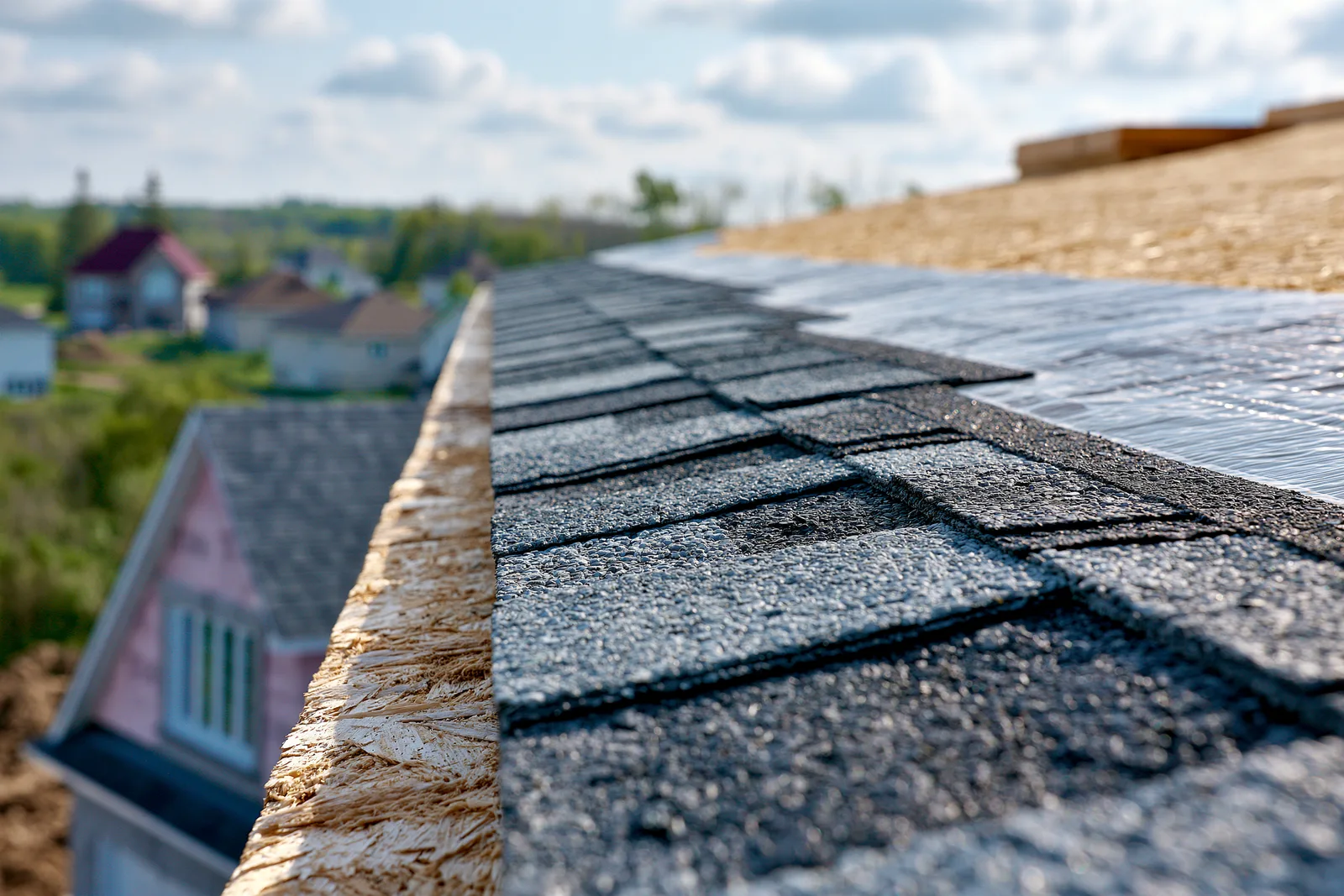
Protect the property and stage materials
Shingles are delivered to the driveway or the roof. Tarps and plywood protect beds, AC units and windows below the eaves, and a trailer or dumpster is set where tear-off can reach it. Cars come out of the garage before the driveway is blocked.
Tear off the old roof
Tear-off normally goes a slope at a time, so no more deck is open than can be covered again. This is the loud part, and it shakes the attic. Anything fragile hanging on top-floor walls is worth taking down.
Check and repair the deck
With the wood bare, soft or damaged sections are marked and replaced, and loose boards are renailed. This is the one step nobody can size in advance.
Dry the roof in
Underlayment, leak barrier in the valleys and drip edge go on first. Once those are down, the house is protected from rain even before the shingles are on.
Flashing and shingles
Shingles go up from the eaves, course over course, with step flashing woven in at walls and new boots at every pipe. Valleys and penetrations take the most time per foot, because that’s where leaks start.
Ridge, vents and cleanup
Ridge vent and cap shingles close the top. Then the ground gets attention: tarps come up, gutters are cleared of grit, and nails are picked up from beds, lawn and driveway.
Weather sets the calendar. Tear-off waits for a dry window, which is why start dates move more in a stormy spring than at any other time of year.
Plan Colleyville roof work around the way you use the house
Material delivery, tear-off and disposal need working room. Driveways, gates, planted beds and outdoor equipment affect how a project can be staged. Tell us about pets, home working, access restrictions or another project that shares that space.
For an early budget, the roof cost planner compares materials on a stated roof-area basis. It is a planning range, not a quote for the house. Height, complexity, access and deck condition can change the final scope.
Product coverage concerns the roofing material, while workmanship coverage concerns its installation. The roof warranty guide explains how those responsibilities differ and why the actual terms matter to a replacement project.
Choosing materials for a Colleyville roof replacement
- Architectural shingles
Layered shingles offer a dimensional appearance and a familiar roof covering. Product selection, fastening, flashing and ventilation all remain part of the installed system.
Compare shingle types- A different shingle profile
A designer profile can change depth and appearance. An impact classification is a separate tested property, so a heavier-looking shingle should not be assumed to have a particular rating.
Understand shingle performance- Standing seam metal
Panel layout, thermal movement and the roof’s connections matter as much as the finish. Valleys and penetrations need details suited to the selected system.
Explore metal roofing
What changes the cost of a Colleyville roof replacement
Roof size sets the baseline. After that, the price moves with how hard the roof is to work on and what’s found under it. The roof cost planner gives a planning range by material before anyone measures.
Shape
Two or four simple planes. Long straight courses and few cuts.
Hips, valleys, dormers and roof-to-wall joints. Every one adds cutting, flashing and waste.
Pitch and height
A single-story roof that can be walked.
Steep or two-story slopes that need more staging and safety setup, and slow down tear-off and loading.
What comes off
One layer of shingles over solid decking.
A second layer of old roofing, or decking that needs sheets replaced once it’s exposed.
What goes on
A standard architectural shingle.
Impact-rated or designer shingles, or standing seam metal, along with the accessories each system calls for.
Openings and extras
A few pipe boots and a ridge vent.
Chimneys, skylights and many vents, or ventilation that needs correcting while the roof is open.
Colleyville roof replacement FAQs
Can I stay home during roof replacement?
Yes, people usually do. Tear-off is loud and shakes the attic, the driveway is tied up, and pets and anyone working from home will notice. Tell us what the household needs so the work can be planned around it.
Should every older roof be replaced?
No. The roof needs an assessment of its current condition. Local damage on sound covering can support a repair; deterioration that continues beyond repair areas can point toward replacement.
Will the planning tool tell me the exact replacement price?
No. The cost planner uses broad regional rates and an explicit example or known area. It cannot inspect decking, measure all roof details or establish your final quote.
Plan the next roof with the existing one in view.
A free inspection helps establish what the existing roof needs, so the new roof can be planned around a real scope.
Call (817) 391-7321