Commercial roofing in Colleyville
A leak over an occupied space needs a roof decision that accounts for the whole assembly. Get help with commercial roof repair, restoration and replacement in Colleyville.
Free roof inspections for Colleyville homes and buildings.
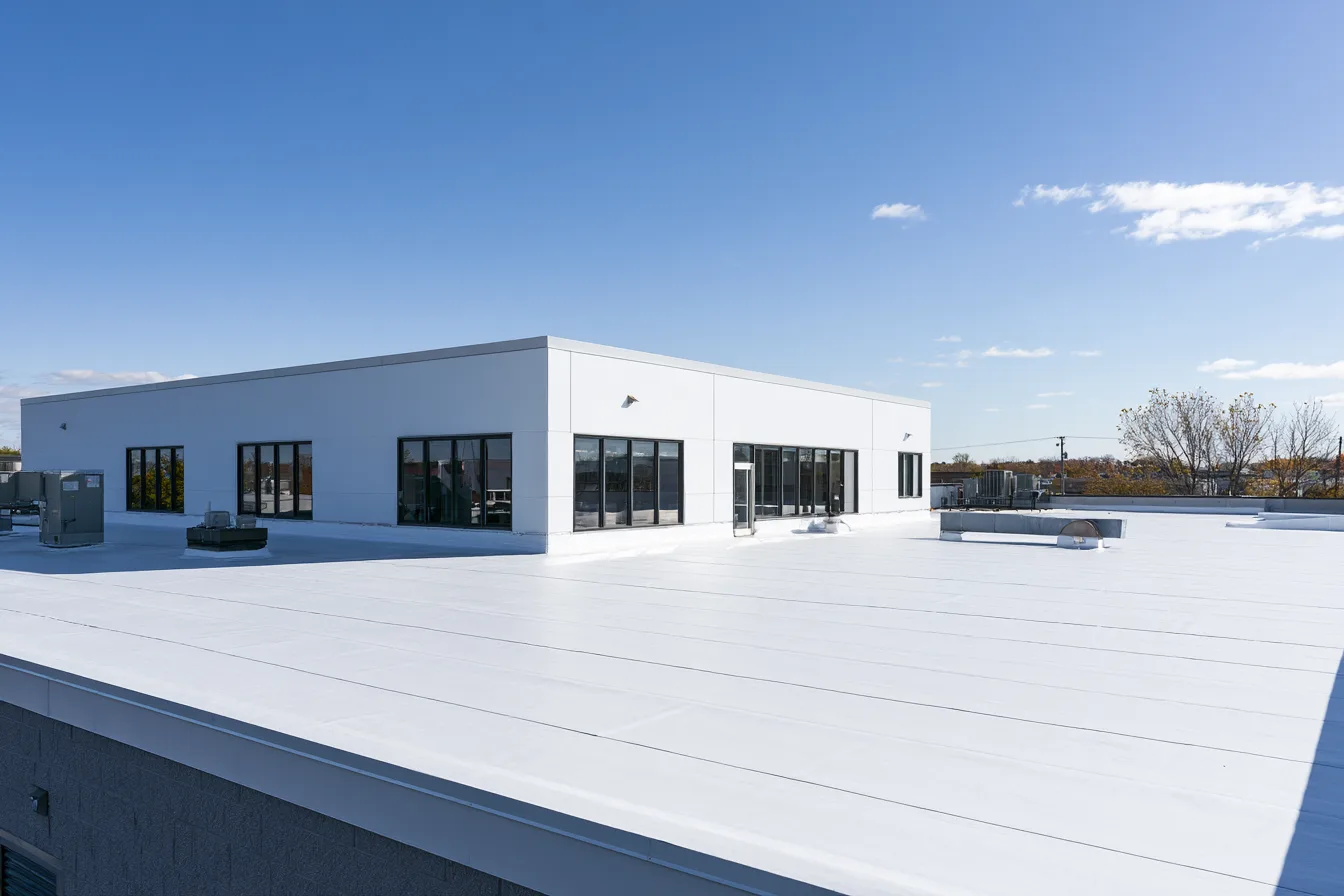
Colleyville commercial roofing starts below the surface
A membrane can look weathered without needing wholesale replacement. It can also look reasonably intact while water has reached the insulation below. The decision depends on more than the visible surface.
On a low-slope roof, the inspection concentrates on seams, roof edges, drains, penetrations and the transitions around rooftop units. Water gets opportunities where a continuous sheet becomes a joint or turns upward. Moisture in the assembly changes which repair or restoration work makes sense.
For a building owner, the answer has to connect roof condition with the useful scope: what can remain, what needs removal and how the finished roof will drain. That is the starting point for a commercial roofing project in Colleyville.
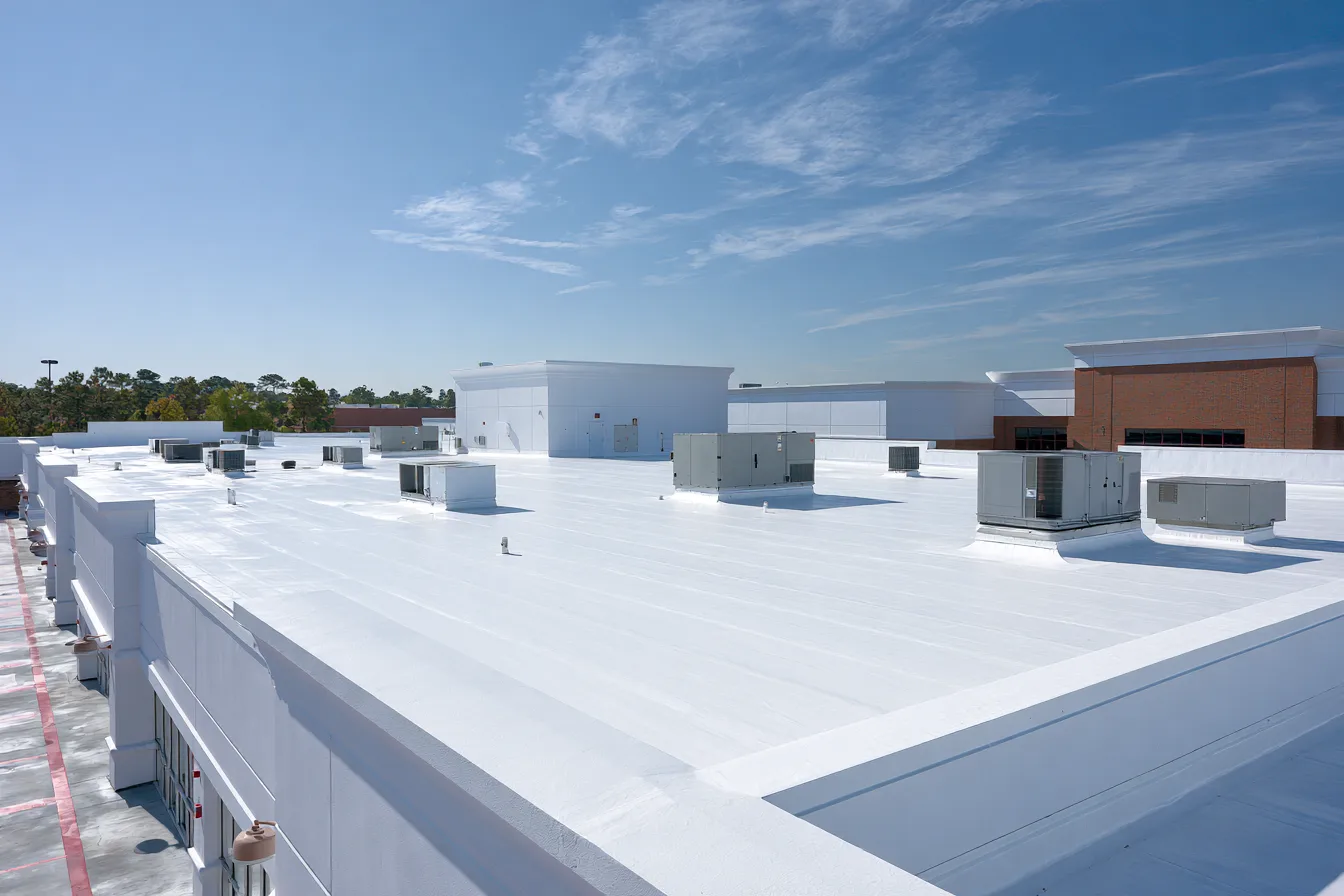
Repair, restore or replace a Colleyville commercial roof
- Repair a defined problem
An isolated seam, puncture or curb flashing can be repaired when the surrounding membrane and substrate remain serviceable. The material and repair method must be compatible, with wet areas addressed rather than covered over.
- Restore a suitable roof
A roof coating can renew a qualified surface after repairs and preparation. Dry, sound substrate, adhesion and drainage are part of qualification. Coating is not a substitute for removing saturated materials.
- Replace the failing assembly
Widespread wet insulation, repeated failures or an assembly that cannot accept durable repairs can shift the project toward replacement. Removal provides access to the deck and a chance to correct insulation, slope and detailing within the new design.
Where a Colleyville commercial roof inspection looks first
A membrane roof is mostly flat sheet. The leaks come from the places where the sheet stops being flat.
- Seams
Sheets are welded or glued edge to edge. A seam that has opened, even a few inches, lets water under the membrane, where it can travel along the insulation before it shows inside.
- Curbs and penetrations
At every HVAC unit, pipe and vent, the membrane turns up and is sealed at the top. Corners are the hardest part to form, and service traffic around units is hard on them.
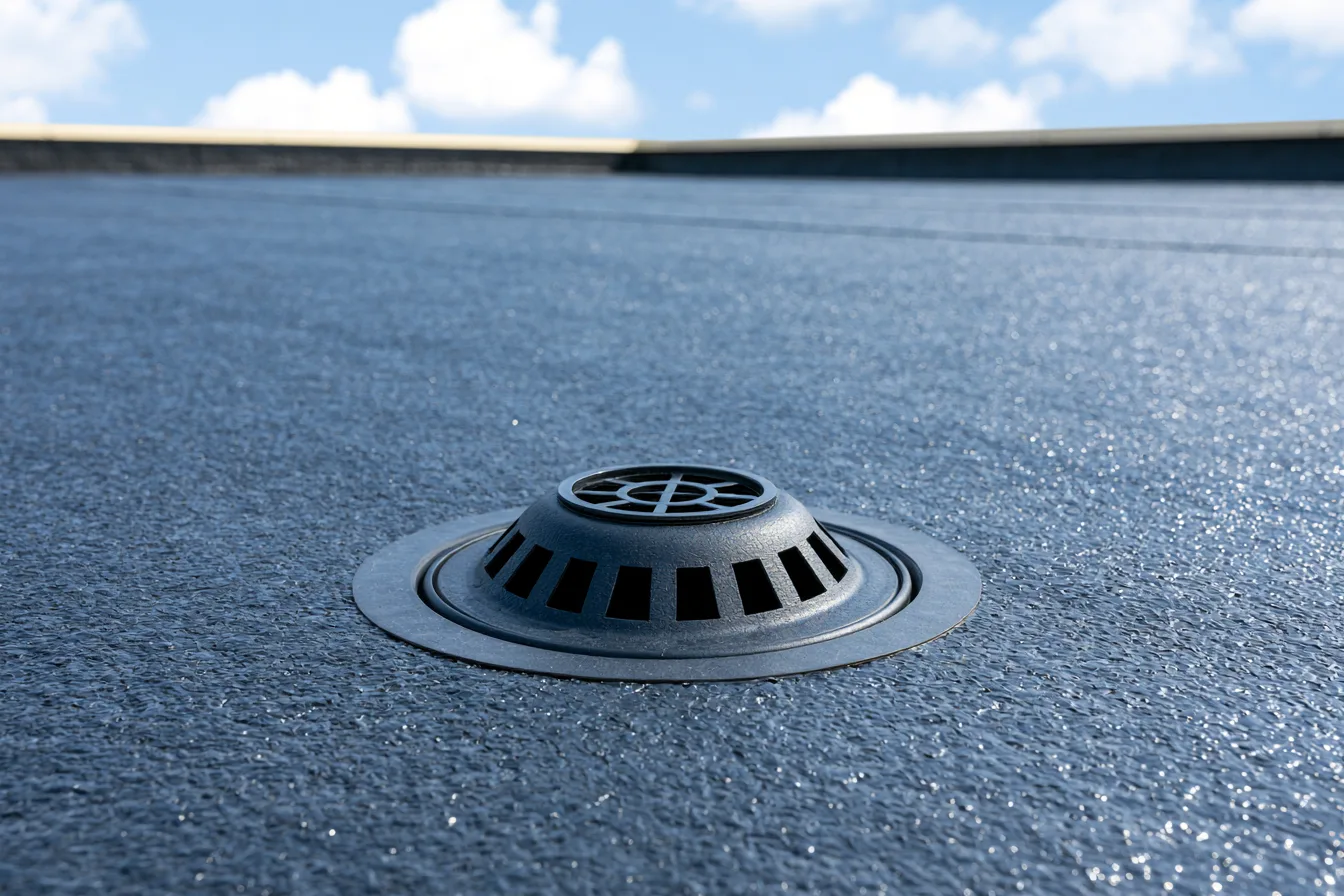
- Drains and scuppers
All the water on the roof ends up here. A clamping ring that has loosened, a cracked drain bowl or a scupper that was flashed short puts that water into the building.
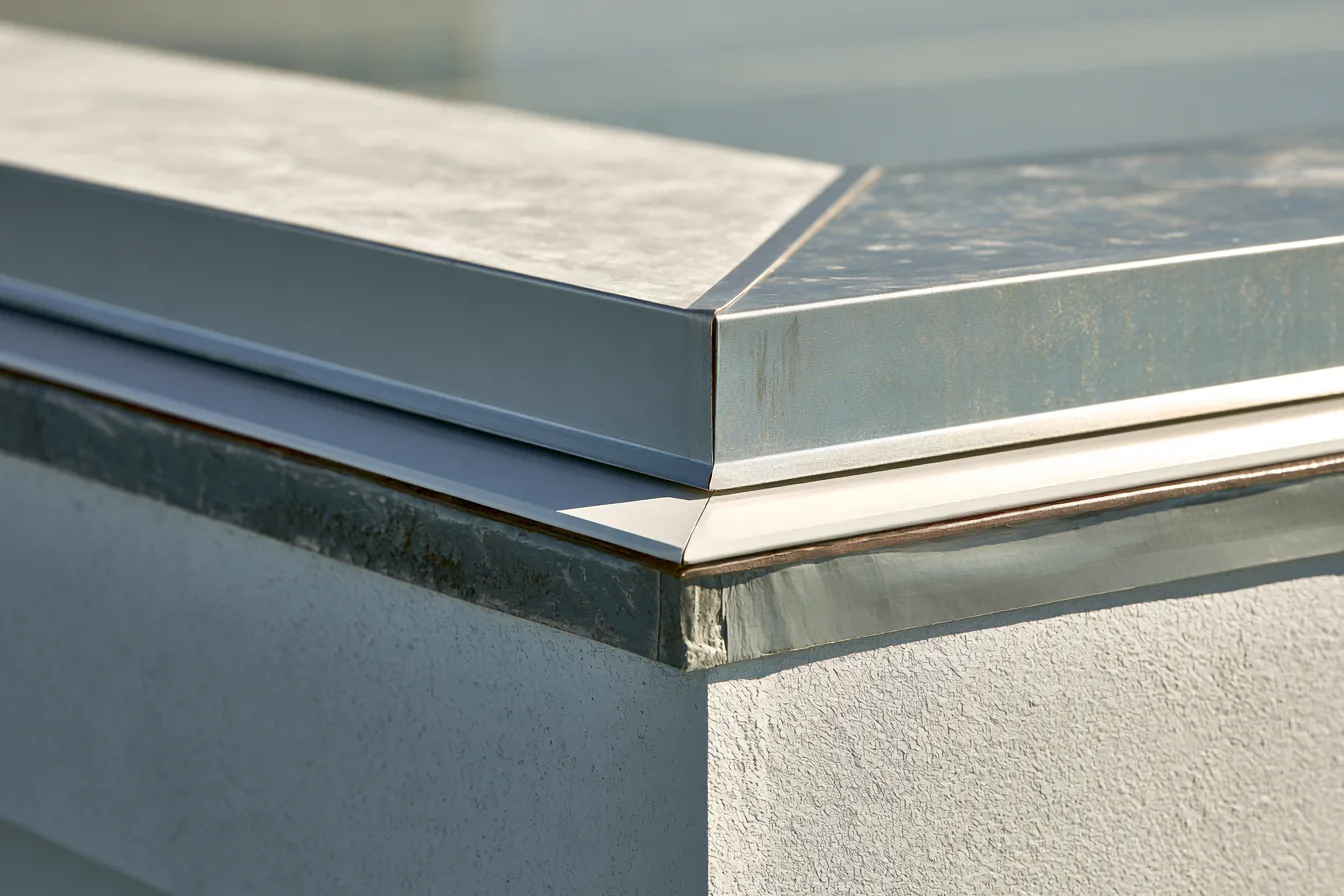
- Parapets and edge metal
Wall flashing and the coping cap on top keep water out of the wall itself. Open coping joints and loose edge metal are also where wind gets under the membrane.
- Wet insulation
Insulation that has taken on water feels soft underfoot and stays wet. Where the layers are in question, a small core cut shows what’s there and whether it’s dry, and the hole is patched.
- Earlier repairs
Patches, mastic and coatings over a problem area show where the roof has leaked before. They also have to be compatible with whatever is done next.
Drainage is part of the roofing scope
Water lingering on a low-slope roof is a reason to look at both the outlet and the path toward it. Debris at a drain, a compressed area of insulation and insufficient slope are different problems. Applying more roof material over the top does not necessarily change that path.
Drainage work also meets the building’s plumbing and structure. The scope needs to identify which trade is responsible for each connection. Roofing work can restore membrane flashing at a drain; a blocked interior leader or structural movement calls for a different part of the building team.
Roof work around an occupied Colleyville building
- Protect the spaces that must stay in use
The loading area, customer entrance and tenant workspaces affect access, staging and the order of work. Those constraints belong in the project scope before equipment arrives.
- Coordinate roof-mounted equipment
Rooftop units interrupt the membrane at curbs, supports and service paths. Work around them must account for equipment access and any HVAC or electrical work that falls outside roofing.
- Plan for what removal reveals
Wet insulation or deck damage can change the work after opening the assembly. A replacement scope should distinguish the planned roofing layers from conditions that need assessment when exposed.
Schedule follows access, weather and the agreed work. Warranty terms depend on the roof system that goes on.
Commercial roofing services in Colleyville
Use the system or scope that matches the building question. You can also begin with a leak or an unknown roof material.
Flat roof repair
Seams, curbs, drains and the condition below the membrane determine the repair boundary.
TPO roofing
Consider the membrane, insulation, attachment and equipment connections as an assembly.
Roof coatings
See why moisture, surface preparation and adhesion come before a restoration decision.
Commercial replacement
Plan removal or recover suitability, insulation, drainage and work around an occupied building.
Colleyville commercial roofing FAQs
Does every flat-roof leak mean the membrane is worn out?
No. A leak can begin at a seam, penetration or drain connection while much of the membrane remains serviceable. The extent of moisture and the condition around the failure help determine whether localized repair is a sound option.
Can a coating avoid commercial roof replacement?
It can be an option for a roof that qualifies. Coating preparation includes the condition of the substrate and the existing membrane, necessary repairs and product adhesion. Wet or deteriorated components need attention before a new surface is applied.
What information helps begin a commercial roofing request?
The building address, its use, the area where water appears and any known roof material are useful. If you do not know the system, say so. You do not need to identify the membrane before requesting an inspection.
Start with the building and the roof concern.
Describe the leak, the recurring repair or the project you’re planning. Include the building use so the roof conversation starts with the space underneath it.
Call (817) 391-7321