Plan roof work around rooftop equipment
A roof replacement and an equipment replacement can overlap in more ways than the calendar. The curb height, flashing, service routes and timing of each trade affect whether the finished roof connections are accessible and sound.
If you are planning work on a Colleyville building, include the equipment in the commercial roofing conversation from the beginning. A free roof inspection gives that discussion a view of the existing assembly.
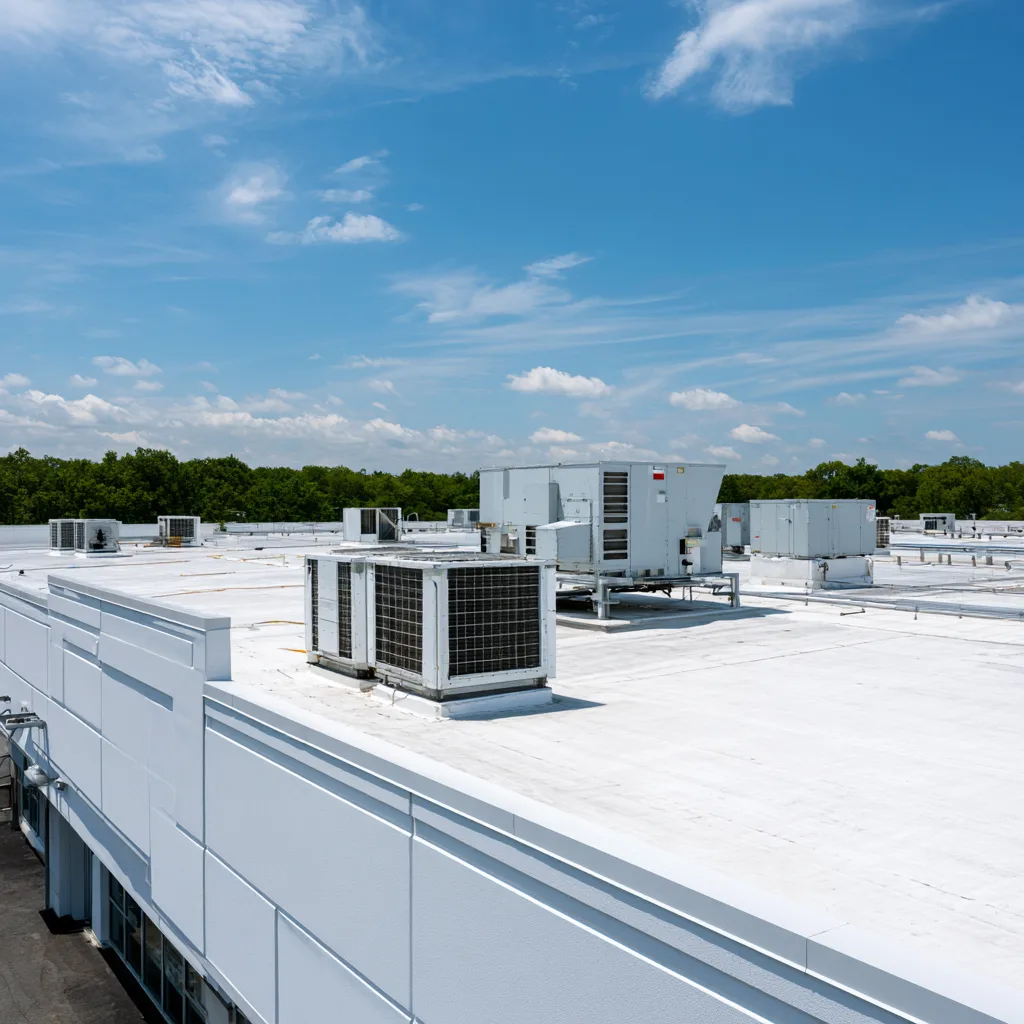
The curb is part of the roof, not just a box under the unit
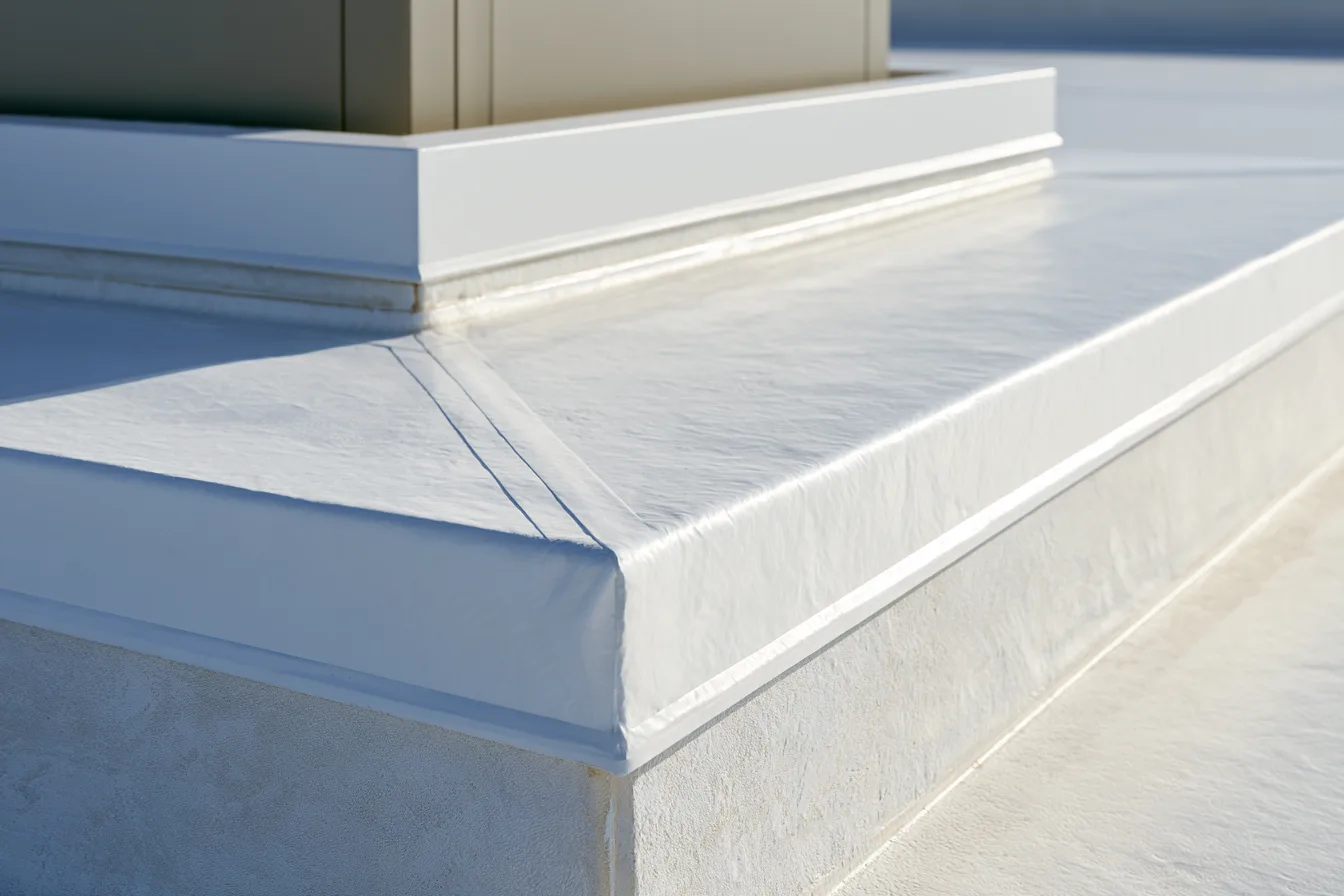
A rooftop unit may sit above the roof on a raised curb. The membrane turns up at that curb, with corners and a termination that keep water outside the assembly. The unit above it has its own joints, openings and drainage arrangements.
When the unit leaks into a room below, those two systems can be confused. Roofing work should address the roof connection. Equipment work should address the unit’s own failure. The symptom alone does not show which trade’s work is needed.
Separate the roof connection from the equipment fault
Imagine a leak that appears beside an air-conditioning unit after a service visit. A puncture in the nearby membrane, a displaced curb detail and a fault in the unit can all place water near the same interior space. That is an illustrative situation, not a claim about a completed project.
The useful assessment follows the water and checks the connections. Replacing the membrane around a unit will not resolve an equipment drain fault, while servicing the unit will not close a puncture through the roof.
If both roof and equipment work are needed, the sequence should leave each connection accessible to the trade responsible for completing it.
Coordinate the work before opening the roof
- The new assembly height
New insulation or another roof layer can change the relationship between the roof surface and a curb. The proposed roof thickness needs to be checked against the available flashing and termination height.
- Removal and temporary protection
Lifting or replacing equipment can expose a roof connection. Plan who protects the opening and when the roof can be made weather-resistant again.
- Power, access and building use
Equipment shutdowns and access may affect the people inside. Identify the occupied spaces and operational constraints before work begins, rather than assuming that the unit can be disconnected at any time.
Build access into the finished roof
The finished roof will still need service visits. A sensible path from access point to equipment, with appropriate protection where needed, helps keep routine maintenance from becoming an avoidable source of roof damage.
For an existing membrane leak, flat roof repair explains why the surface detail and the assembly beneath it need assessment together. For a larger project, replacement planning can include the equipment connections from the outset.
Loose parts, tools and equipment supports also need consideration. A roof surface is a water barrier, not a general storage area for a mechanical service visit.
Include the equipment when you describe the roof.
Tell Colleyville Roofing about the building, the units involved and any planned equipment changes. A free inspection starts a roofing scope that accounts for those connections.
Call (817) 391-7321